
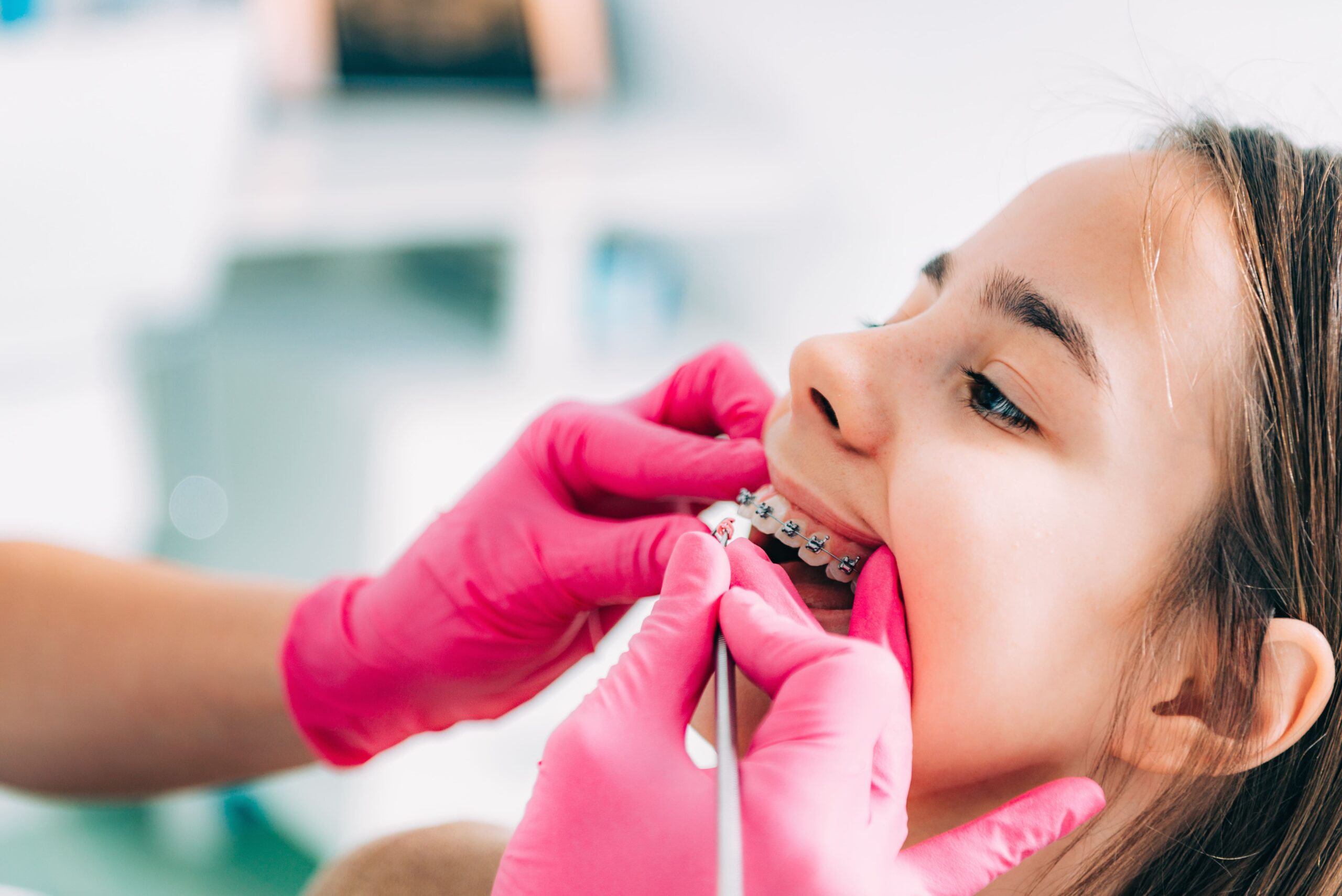
As a parent, it can be hard to know when your child should start orthodontic treatment. Maybe you have noticed that a few teeth are crowded, your child has an overbite, or their permanent teeth seem to be coming in at odd angles. You may also wonder whether it is too early to start thinking about braces.
The truth is that there is no single age when every child should get braces. Teeth and jaws develop at different rates, so orthodontic treatment needs to be based on the individual child.
For most children, an orthodontic evaluation around age 7 is a good starting point. This does not mean your child will need braces right away. Instead, an early visit gives an orthodontist the opportunity to check how the teeth and jaws are developing and determine whether treatment may be helpful now or in the future.
For San Ramon parents, understanding when to schedule an evaluation and what happens afterward can make the process much easier.
When Should Kids First See an Orthodontist?
The American Association of Orthodontists recommends that children have their first orthodontic evaluation by age 7. At this age, children typically have a combination of baby teeth and permanent teeth, which gives an orthodontist a chance to evaluate how the adult teeth are developing.
Some orthodontic problems are easier to spot while a child is still growing. Crowding, crossbites, overbites, underbites, and problems with tooth eruption can sometimes be identified before they become more complicated.
An early appointment does not necessarily lead to treatment. In many cases, the orthodontist may recommend waiting and checking your child’s development again later.
That is actually one of the benefits of an early evaluation. You do not have to guess whether something is a problem or whether you should wait.
Does a 7-Year-Old Need Braces?
Most 7-year-olds do not need braces immediately.
An early orthodontic evaluation is mainly about understanding your child’s development. If the teeth and jaws are developing normally, the orthodontist may recommend monitoring them until more permanent teeth come in.
Some children, however, may benefit from early treatment. This is often referred to as Phase 1 orthodontic treatment. It may be recommended when there is a specific problem that could benefit from being addressed while the child is still growing.
The important thing is that treatment should be based on the child’s needs rather than their age alone.
What Age Do Children Usually Get Braces?
Many children are ready for braces between the ages of 11 and 14. By this point, most of their permanent teeth have erupted, making it easier to address problems with tooth alignment and the bite.
That does not mean every child should get braces during this age range.
Some children may need treatment earlier because of a developing jaw or bite problem. Others may not need orthodontic treatment until they are older. A child’s growth pattern, dental development, and specific orthodontic concerns all play a role in deciding when treatment should begin.
The goal is not to start braces as early as possible. The goal is to start them at the right time.
Signs Your Child May Need Braces
Parents often notice potential orthodontic problems before they know what they mean. If you see something unusual about your child’s smile, it is worth bringing up during their next dental or orthodontic appointment.
Crowding is one of the most common signs. Permanent teeth may come in very close together or overlap because there is not enough room for them.
Spacing can also be a concern. Some gaps are completely normal as children lose baby teeth, but larger or persistent spaces may indicate an issue with tooth development or alignment.
You may also notice that your child’s upper and lower teeth do not fit together properly. An overbite, underbite, crossbite, or open bite can affect the way the teeth function.
Other signs include:
- Difficulty biting or chewing
- Frequently biting the cheeks or roof of the mouth
- Teeth that stick out noticeably
- Difficulty closing the lips comfortably
- Permanent teeth that are delayed in erupting
- Early or late loss of baby teeth
These signs do not automatically mean your child needs braces. They simply give you a reason to have their teeth and bite evaluated.
Why Does the Timing of Braces Matter?
Children’s teeth and jaws are constantly changing as they grow. This is one of the main reasons timing matters in orthodontics.
For some children, early treatment can help address a developing problem while the jaws are still growing. For others, waiting is the better option because there is no immediate concern.
Starting treatment too early can sometimes mean a longer overall treatment process. Waiting too long can allow certain problems to become more difficult to correct. An orthodontist can evaluate your child’s development and recommend the appropriate timing.
This is why two children of the same age may receive completely different treatment recommendations.
What Is Phase 1 Orthodontic Treatment?
If an orthodontist identifies a significant concern during an early evaluation, you may hear the term Phase 1 treatment.
Phase 1 treatment takes place while a child still has some baby teeth. Rather than trying to completely straighten the smile, the goal is usually to address a specific developmental concern.
For example, treatment may help create room for permanent teeth, correct certain bite problems, or guide the development of the jaws.
Not every child needs Phase 1 treatment. Some children can simply be monitored until they are older and have more of their permanent teeth.
A follow-up evaluation can help determine when active treatment makes the most sense.
How a Pediatric Orthodontist Can Help
Parents sometimes wonder whether they should wait until their child’s general dentist recommends an orthodontic appointment. While your family dentist can identify many potential concerns, an orthodontic evaluation provides a closer look at tooth alignment, bite development, and the relationship between the jaws.
A pediatric orthodontist or orthodontic practice experienced in treating children can also help parents understand what to expect as their child’s smile develops. The goal is not always to begin treatment right away. Sometimes the best recommendation is simply to monitor growth and return at a later date.
Having that information can make it easier to plan ahead instead of waiting until a problem becomes more noticeable.
What Happens During a Child’s First Orthodontic Visit?
Your child’s first appointment should not feel intimidating. The orthodontist will examine the teeth and bite and look at how the jaws are developing.
Depending on your child’s needs, the office may also take photographs or digital images. These tools help the orthodontist get a more complete picture of your child’s oral development.
The orthodontist can then explain what they see and whether treatment is recommended.
You may be told that your child is ready for braces, that early treatment could be beneficial, or that everything looks good and your child should simply be monitored. There is no “wrong” outcome.
For many parents, an early appointment is valuable simply because it answers the question, “What should we do next?”
How Long Will Kids Need Braces?
Once your child is ready for treatment, the length of time they wear braces depends on the complexity of their case.
Some children have relatively simple alignment concerns, while others need more extensive correction. Keeping scheduled appointments and following instructions about brushing, eating, elastics, and other aspects of treatment can help keep everything moving in the right direction.
It is also important not to compare your child’s treatment timeline with another child. Even siblings can have very different orthodontic needs.
Your child’s orthodontist can provide a more accurate estimate after evaluating their teeth and creating a treatment plan.
Choosing an Orthodontist in San Ramon
Finding the right orthodontic practice is an important part of the process. Parents often want a team that can make children feel comfortable while also providing clear information about treatment.
A San Ramon orthodontist can evaluate your child’s developing smile and help you understand whether braces are appropriate now or whether it is better to wait. It is also helpful to choose a practice that treats children and teens regularly, since younger patients can have very different orthodontic needs from adults.
Good communication matters, too. Your child should understand what is happening and feel comfortable asking questions throughout treatment.
Bigman Orthodontics: Schedule a San Ramon Consultation
There is no perfect age when every child should get braces. An orthodontic evaluation around age 7 can help identify potential concerns, but many children will not actually begin treatment until they are older.
The best time for braces depends on your child’s teeth, bite, jaw development, and overall orthodontic needs. An early evaluation can give you a better idea of what is happening and whether treatment should begin now, later, or not at all.
Bigman Orthodontics provides orthodontic care for children and teens in San Ramon, CA. If you have noticed crowding, spacing, bite problems, or other changes in your child’s smile, contact the office to schedule a consultation and learn what treatment options may be right for your child.